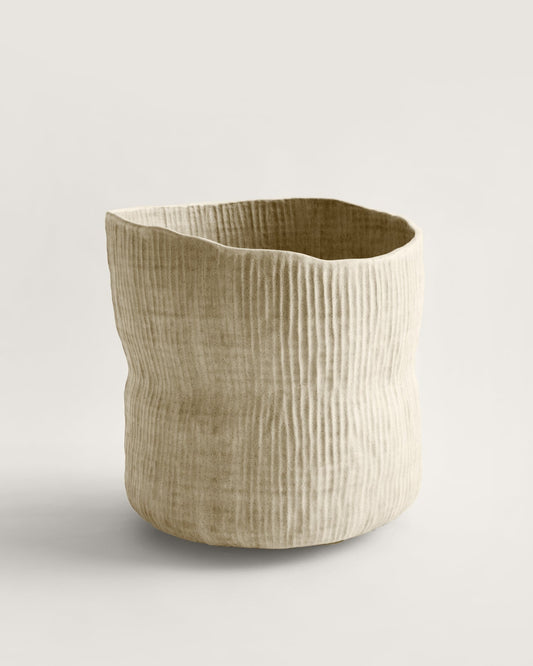
The Art of Planters
The Art of Planters

The Art of Planters

Balance in the garden can mean a number of things — a thriving ecosystem, an ideal distribution of shade and sunlight or a harmonious dialogue between human intervention and nature's whims. When forming a plan for potted plants in outdoor spaces, we find that a thoughtful approach to selecting forms, scales and materials results in a balance unto its own that integrates seamlessly into the environment. When the garden is balanced, so too are those who step outside to enjoy it. Here are our recommendations for adding planters to your outdoor environment.

Brown pot in a grassy outdoor setting
Ceramic pot on a muddy bank with water in the background

Thoughtful materials

The planters we typically reach for are those made from clay, often in organic, handhewn shapes and raw finishes. High-fired clay earthenware is known for its typical burnt red hue, but its colors can vary widely, including shades of yellow, orange, gray or brown. Copper is lightweight yet durable, and develops a green patina over time. Stone, and limestone in particular, also makes for an ideal planter material as it possesses a naturally variegated color and texture, lending an element to the garden that appears to transcend time.

Color scheme

While a mix of shades is ideal for the garden, we typically choose between a warm- or cool-toned palette to achieve visual balance. If a warm palette is desired, select planters made of red terracotta or other clays with a warm hue. For a cooler color scheme, look toward carved stone or marble, or clays that have been finished with a white cast.

Sizing and placement

When possible, we opt for planters that are large in scale to make a resounding statement in the garden. Mirroring the asymmetry found in nature, pair this planter with one or two smaller pots directly adjacent, and place a "satellite" pot in the same area but several feet away. Play with different variations on this theme, maintaining a general rule of using odd numbers and irregularity.

Adding a topper

After you've selected your planters and potted your plants, we recommend adding a clay pebble or rock topper to your planter on top of the soil. Our favorite toppers make for a porous surface, improving water retention and adding a uniform finish to your planters.

Creating an understory

Soften and add a textural accent to your potted plant by creating an understory with a complementary plant variety. Carex, a soft, grass-like plant, works well with shade, while trailing melaleuca cascades beautifully downward. Thyme lives happily as a planter understory and can be harvested for culinary use, and sedums offer a variety of colors to contrast with your primary plant.

Featured Materials

Back to Field Notes